



 +86 15241556620(WhatsApp)
  vip@thjh.com



Key Considerations for Selecting Paint Booth Filter Media
2025-12-15 13:30:57
Click:
“
Paint booth filter media is a critical component in ensuring optimal performance
”
Paint booth filter media is a critical component in ensuring optimal performance of your painting operations—its quality directly impacts paint finish precision, equipment longevity, and compliance with environmental regulations. For businesses seeking reliable, efficient filter solutions, understanding the core selection criteria is essential to avoid operational disruptions, unnecessary replacement costs, and compliance risks. Below are the key factors to guide your purchase of paint booth filter media:
1. Prioritize Filtration Efficiency Aligned with Your Application
Filtration efficiency is the primary (indicator) of a filter’s ability to capture overspray, dust, and volatile organic compounds (VOCs) generated during painting. It is critical to match the efficiency rating to your specific workflow:
Primary Filtration (Pre-Filters): Ideal for capturing large overspray particles (5-10μm) in the initial stage of air intake. Look for filters rated G3-G4 (per EN 779 standard) or MERV 4-6 (per ASHRAE standard) — these are cost-effective for pre-treating air before it reaches secondary filters.
Secondary Filtration (Fine Filters): Required for removing fine particles (1-5μm) and residual contaminants that affect paint adhesion and finish quality. Opt for F5-F9 (EN 779) or MERV 8-13 rated filters, especially for high-precision painting (e.g., automotive, industrial machinery).
Specialized Filtration: For projects involving high-VOC paints or odor control, choose filter media integrated with activated carbon or chemical adsorption layers—these enhance the removal of harmful gases while maintaining particle filtration performance.
2. Evaluate Dust Holding Capacity to Reduce Replacement Frequency
Dust holding capacity (DHC) refers to the maximum amount of contaminants a filter can trap before its pressure drop exceeds operational limits (typically 200-300 Pa). A higher DHC translates to longer service life and fewer filter changes, reducing downtime and labor costs:
Material Impact: Synthetic fiber filters (e.g., polyester, polypropylene) generally have higher DHC than glass fiber alternatives, as their porous structure retains more particles without clogging quickly.
Structural Design: Pleated or layered filter media offers a larger surface area for dust accumulation compared to flat sheets—this is particularly beneficial for high-volume painting operations where filter replacement is disruptive.
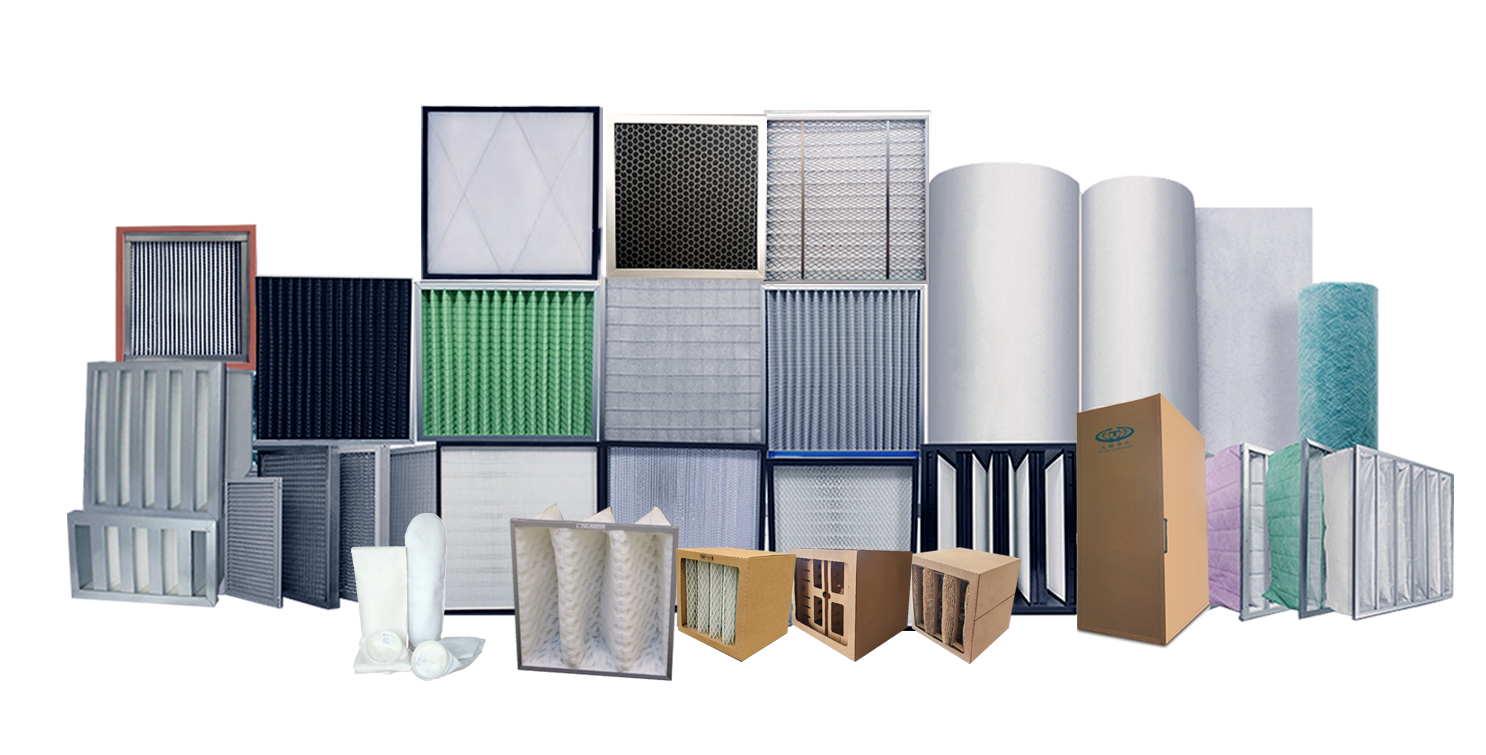
3. Select the Right Material for Environmental Conditions
Paint booth environments vary in temperature, humidity, and chemical exposure—choosing filter media resistant to these factors prevents premature degradation:
Synthetic Fibers (Polyester/Polypropylene): The most versatile option, offering excellent resistance to moisture (up to 90% relative humidity) and moderate temperatures (up to 120°C). They are also resistant to most paint solvents (e.g., lacquers, enamels), making them suitable for general industrial painting.
Glass Fiber: Delivers high filtration efficiency but has lower moisture and impact resistance. Best for low-humidity, low-vibration environments (e.g., small-scale precision painting).
Fire-Retardant Materials: For booths using flammable paints or operating at high temperatures, select filter media with fire-retardant coatings (compliant with standards like UL 94 V-0) to mitigate fire risks.
4. Ensure Dimensional Compatibility & Customization
Ill-fitting filters cause air leakage, which bypasses contaminants and compromises both filtration performance and booth pressure balance. To avoid this:
Measure Precisely: Confirm the filter’s length, width, and thickness against your booth’s filter housing dimensions (e.g., 20”x20”x2”, 500mmx500mmx50mm). Standard sizes are widely available, but custom dimensions may be required for non-standard booth designs.
Check Seal Design: Opt for filters with integrated gaskets or edge seals (e.g., foam, rubber) — these create a tight fit between the filter and housing, eliminating leakage points.
Conclusion
Selecting the right paint booth filter media requires a balance of efficiency, durability, and compliance—factors that directly influence your operation’s productivity and sustainability. By focusing on the criteria above, you can minimize operational costs, ensure consistent paint quality, and meet environmental obligations.
At Dandong Tianhao Purification Co., Ltd., we offer a range of paint booth filter media tailored to industrial needs—from standard synthetic fiber filters to custom fire-retardant or activated carbon-integrated solutions. All our products comply with international standards, ensuring reliable performance and regulatory compliance. For personalized advice, contact our team today.
Author:
DANDONG TIANHAO CLARIFICATION MATERIAL CO .,LTD.








文章推荐

Name: DANDONG TIANHAO CLARIFICATION MATERIAL CO .,LTD.
Address:NO.16 LONGTENG ROAD, WULONGBEI TOWN, DANDONG,LIAONING PROVINCE
Tel: +86-415-4107289 Mobile:+86 15241556620(WhatsApp)、+86 15604159039(WeChat)
Copyright ©2024 All Rights Reserved DANDONG TIANHAO CLARIFICATION MATERIAL CO .,LTD.

Name: DANDONG TIANHAO CLARIFICATION MATERIAL CO .,LTD.
Address:NO.16 LONGTENG ROAD, WULONGBEI TOWN, DANDONG,LIAONING PROVINCE
Tel: +86-415-4107289
Mobile:+86 15241556620(WhatsApp)、+86 15604159039(WeChat)

点击右上角
分享给朋友吧
Copyright ©2024 All Rights Reserved DANDONG TIANHAO CLARIFICATION MATERIAL CO .,LTD.
 facebook
 whatsapp
